


How to Find the Best B2B Influencers on YouTube (2026 Guide)
A step-by-step method to source, qualify and select the best B2B influencers on YouTube. Tools, prompts, scoring criteria and common mistakes to avoid.
A step-by-step method to source, qualify and select the best B2B influencers on YouTube. Tools, prompts, scoring criteria and common mistakes to avoid.
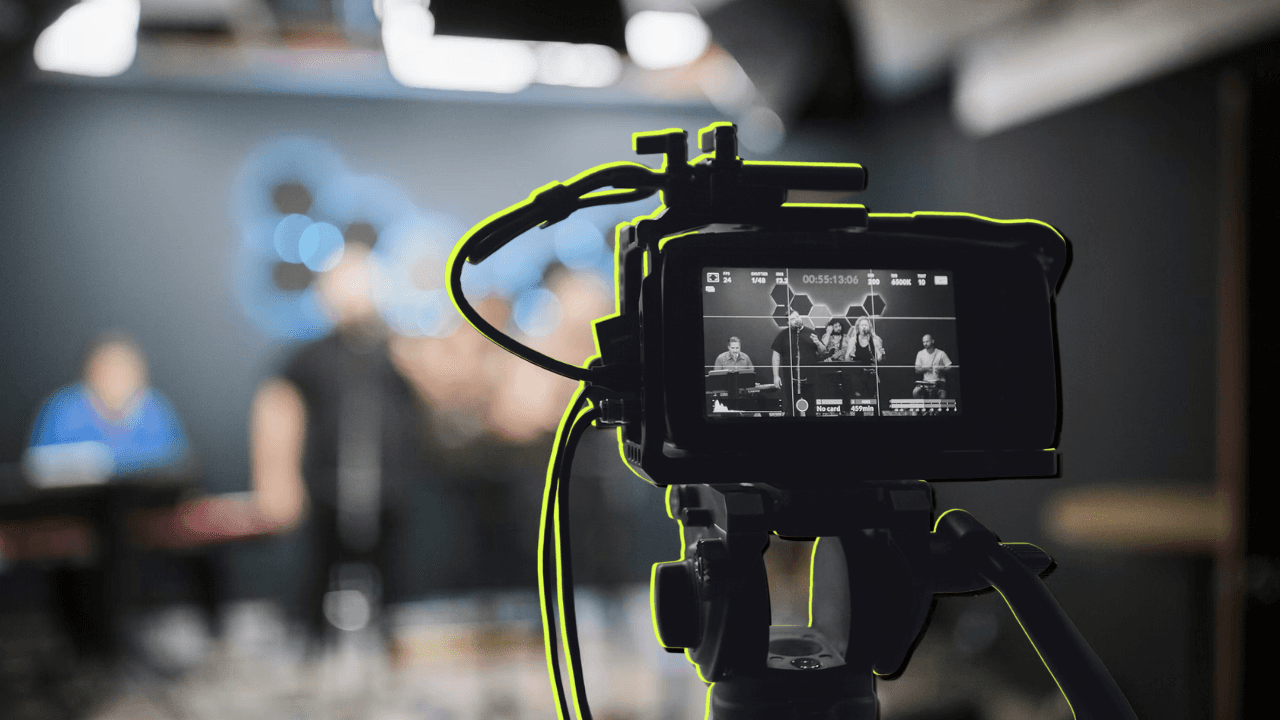
Finding the best B2B influencers on YouTube isn’t about picking the channels with the most subscribers. It’s about matching the right voice to the right audience and the right campaign objective. The most effective sourcing process combines four layers: a clear campaign foundation, a precise Ideal Influencer Profile, a mix of AI tools and dedicated platforms, and rigorous manual qualification. Skip any of these and you end up paying premium rates for views that won’t convert.
Why YouTube is the most undervalued B2B influence platform in 2026
How to define campaign goals that actually match YouTube’s strengths (awareness, lead gen, LLM visibility)
How to build an Ideal Influencer Profile that filters for real B2B fit
The tools, manual techniques, and warm signals that surface the best channels
The 5 qualification criteria that separate channels worth signing from channels worth skipping
The mistakes (subscriber chasing, ignoring watch time, pitching the wrong offer) that kill most B2B YouTube campaigns
YouTube is the most undervalued B2B influence platform right now. Sean Frank, CEO of Ridge, has spent over 10 million dollars on influencer marketing and publicly stated YouTube is the single most valuable channel he’s used. The reason is structural: long-form video creates a depth of audience trust that no other format can match.
But that depth comes with friction. Producing a YouTube video takes serious time and budget, which means the pool of credible B2B creators is small and often overlooked in standard influencer databases. Sourcing here is harder than on LinkedIn or Instagram. The good news: it’s also where the best B2B campaigns are happening right now.
There’s another reason YouTube matters more in 2026 than it did even a year ago. Search engines and LLMs increasingly cite YouTube content in their answers. According to a 2025 study by Search Engine Land, YouTube is cited 200 times more frequently than any other video platform in AI search results. Sponsoring the right YouTube creator doesn’t just reach their audience, it can also place your brand directly inside the answers ChatGPT and Google AI Overviews give to your buyers.
Unlike most other social media, sourcing the wrong channel doesn’t produce a “bad” campaign. It produces an expensive one. YouTube sponsorships are typically the highest-priced format in B2B influencer marketing, which means a misaligned partnership costs more and takes longer to recover from. Get the sourcing right and you access one of the highest-trust formats available. Get it wrong and you’ve funded someone else’s content calendar.
Before browsing YouTube or listing channel names, you need two things locked in: your goal and your target audience. Sourcing without these is the most common reason YouTube campaigns underperform, especially given the higher production costs involved.
YouTube supports very different campaign objectives, and the creator type needed for each one is distinct. The same channel that delivers strong awareness numbers might be terrible at lead generation, and vice versa. The three main objectives behind B2B YouTube campaigns each call for a different type of profile.
Campaign goal | Best-fit creator type | Primary KPI |
Brand awareness | Mid-tier or macro creators with broad reach in your industry | Average views per video |
Lead generation | Niche creators whose audience matches your ICP | Clicks, conversions, leads attributed |
SEO and LLM visibility | Authority creators in the niche of your target keyword | Search ranking, citation in AI answers |
The third objective deserves attention. Sarah Adam at Wix has publicly shared that she now uses YouTube specifically to improve Wix’s visibility in LLM answers and Google search results for queries like “best website builder.” The strategy: sponsor authoritative creators in your category to publish videos targeting the exact keywords your buyers ask AI tools about. The video then becomes a core citation source the LLM pulls from.
YouTube audience data is richer than most platforms when you have access to it, but it requires you to ask the right questions upfront. Five dimensions matter most:
Geography: YouTube is global by default, but audience concentration varies significantly by channel. A creator with a 70 percent US audience is useless for a market-specific campaign.
Industry or vertical: B2B YouTube audiences cluster around topics, not industries. A channel about SaaS growth and a channel about enterprise IT infrastructure reach completely different buyers.
Job titles and seniority: Unlike LinkedIn, YouTube doesn’t surface this natively. You need to ask creators for their analytics or infer from content type.
Company size and revenue band: If a channel teaches startup founders how to find product-market fit, its audience is early-stage companies. If a channel teaches procurement directors or CTOs about enterprise architecture, its audience is large established companies. Match the channel’s natural focus to the company size you’re selling to.
Buying stage: Long educational videos reach buyers who are just starting to research the problem. Comparison and review videos reach buyers who already know what they need and are deciding between options. Pick a creator whose content matches where your buyer is in their decision-making process.
One important insight from Adelė Grigūnaitė, Head of Influencer Marketing at Omnisend: YouTube tends to attract audiences who are doing things themselves. Channels with tutorial-heavy content reach practitioners, not executives. If your buyer is a CIO who delegates implementation, YouTube may not be the right channel regardless of how perfect the creator looks otherwise.
Once your campaign foundations are clear, translate them into an Ideal Influencer Profile. The IIP is to influencer sourcing what an Ideal Customer Profile is to sales: a structured definition of who you’re looking for, used to evaluate every candidate consistently.
A solid B2B IIP for YouTube covers five dimensions:
YouTube rewards production quality and consistency, which means some channels have built large audiences on entertainment value rather than genuine expertise. In B2B, this distinction is critical. Look for creators with verifiable professional backgrounds: past roles in the field, company-building experience, citations in industry media. A channel that has been consistently right about your industry is worth more than a channel that is consistently watched.
A channel with 15,000 subscribers where a significant portion are mid-market operations directors will outperform a channel with 200,000 subscribers covering your space only partially. YouTube subscriber counts are particularly misleading in B2B because many channels accumulate subscribers from viral moments unrelated to their regular content. Always look at per-video view counts, not total subscribers.
YouTube B2B content falls into distinct formats: long-form interviews, solo educational breakdowns, product reviews, documentary-style case studies, and more recently short vertical clips. Each drives a different audience mindset. Match the format to your campaign goal: interviews and case studies for thought leadership, tutorials and comparisons for lead generation, broad industry analysis for awareness.
Does the creator’s style match your brand? A channel full of controversial opinions will feel wrong for a serious enterprise brand, even if the audience is perfect. If you’d need to ask the creator to speak differently to promote your product, the audience will sense it’s fake.
Activity level and consistency. Consistency on YouTube means something different than on LinkedIn. A creator publishing one high-quality video per week is more reliable than one publishing five shallow videos. But a creator who published actively two years ago and now uploads once every three months has a declining audience regardless of subscriber count. Check upload frequency over the last 12 months, not just the last 30 days.
LLMs like ChatGPT, Perplexity and Claude can accelerate first-pass research significantly. For YouTube specifically, they’re useful for identifying channels you wouldn’t have found through search, particularly in niche environments.
The quality of LLM output depends almost entirely on the precision of your prompt. A vague prompt like “give me B2B YouTube influencers in marketing” will return the same five obvious names everyone else gets. Garbage in, Garbage out. A prompt grounded in your IIP returns more differentiated results.
Include the topic or vertical, the type of audience you’re targeting, the geography, the approximate subscriber range, and whether you want independent creators rather than brand or agency channels. Then iterate on the outputs. Ask the model to remove generalists, focus on a sub-niche, or surface smaller channels the obvious searches would miss.
A simple prompt template you can use:
Act as a B2B influencer marketing expert. My target audience is [ICP]. List 10 YouTube channels about [topic], with fewer than 50k subscribers, based in [country], with an educational/expert tone. Exclude brand channels and news aggregators.
LLMs hallucinate on YouTube more than on LinkedIn because channel-level data is less structured and less written about on the web. They invent channel names, misattribute content formats, and frequently give channels that have been inactive for over a year. Every channel returned by an LLM must be manually checked: verify the channel exists, check the last upload date, watch at least two recent videos before adding it to a real shortlist.
For sourcing at scale or when you need verified data, dedicated platforms outperform LLMs on YouTube. They give you structured channel analytics, audience demographic estimates, and growth trajectories that manual browsing can’t replicate efficiently.
Tool | Strengths | Best for |
Favikon | Cross-platform creator scoring, audience authenticity, advanced filters by subscriber count, growth rate, average views per video | Quick pre-signature audits and discovery |
Modash | YouTube audience demographics, fake subscriber detection | Validating audience match with ICP |
Tubular | YouTube-specific analytics, creator discovery by topic | Sourcing data-rich B2B channels |
Social Blade | Public YouTube growth and engagement history | Free first-pass screening |
VidIQ Vision for YouTube | Video-level performance insights, view velocity analysis, detection of unnatural spikes or flat curves (potential paid views) | Identifying suspicious growth patterns and validating performance authenticity |
The right approach is rarely tool versus manual: it’s tool plus manual. Use platforms to generate a verified shortlist, then validate each profile manually before reaching out.
The most valuable B2B YouTube creators are often already orbiting your brand without you noticing. Three internal sources surface them faster than any tool.
Ask your best clients directly. Send a short message to your strongest customers asking which YouTube channels they actually watch for content related to your category. Which creators do they trust? Has any video influenced a recent decision? YouTube viewing habits in B2B are rarely volunteered spontaneously, but when you ask directly, the answers surface channels that no database would return.
Loop in your sales and customer success teams. Sales hears which content prospects reference in discovery calls. CS hears which creators customers mention when explaining how they stay current. Set up a recurring channel where these teams share creator names they encounter. Over a few months, patterns emerge that point clearly to the most influential voices in your category.
Check who’s already engaging with your brand. Look at comments on your own YouTube channel and at videos where your brand has been mentioned organically. Creators who have already covered your category, or referenced your product, are pre-warmed. A partnership conversation with a creator who already knows your product is structurally easier and tends to produce more authentic content.
The Kast take
YouTube partnerships that start from a warm signal consistently outperform cold-sourced ones. When a creator already has an informed opinion about your category, the integration feels natural to their audience rather than paid. We include a network mining step in every YouTube campaign brief before any tool-based search, because the channels that actually move pipeline are rarely the ones that appear first in a database.
Even with AI and dedicated tools, manual sourcing on YouTube remains essential for finding niche or emerging channels. Five techniques produce the best results.
Use YouTube’s search bar with specific industry terms, then filter by upload date and sort by relevance. Avoid filtering by view count at this stage because it surfaces only the biggest channels. The goal here is breadth, not validation.
Once you find one strong B2B channel in your niche, YouTube’s algorithm surfaces similar channels in the sidebar and on the creator’s page. This is often the fastest way to map the inner circle of credible voices in a vertical. One strong channel typically leads to five to ten others.
Look at comment sections on top-performing videos in your category. Creators who leave thoughtful, substantive comments are often running their own channels with smaller but highly engaged audiences. These are the micro-creators most databases miss entirely.
B2B YouTube creators frequently interview each other. A creator who appears as a guest on three or four channels in your vertical is by definition credible enough to be invited repeatedly. Tracking these guest appearances reveal high-value creators who may not have huge subscriber counts but have strong peer recognition.
When scanning a channel, focus on three things to eliminate fast: last upload date, average view count on the last five videos compared to subscriber count, and whether the comment section contains substantive professional discussion or generic reactions.
Once you have a shortlist of 15 to 30 channels, qualification is what separates the noise from the signal. Five criteria matter most for B2B YouTube campaigns.
Subscriber count is one of the least useful metrics on a YouTube channel for B2B purposes. What matters is who watches, not who subscribed two years ago. Request a YouTube Studio analytics export from the creator showing audience demographics: age ranges, geographies, and where available, interests and device usage. A creator who refuses to share this data before signing is a red flag regardless of their subscriber count.
Engagement rate tells you whether the audience is paying attention. Consistency tells you whether that attention is reliable. A channel with two viral videos inflating its average looks identical on paper to one that delivers steady engagement on every upload. They are not the same risk. Watch for spikes followed by silence, it usually indicates sponsored-content cycles, not real audience traction.
On YouTube, watch time matters more than views. A video watched to 70 percent completion by 5,000 people has influenced those people far more deeply than a video with 50,000 views and an average watch time of 45 seconds. Ask for average view duration and audience retention curves on recent videos. Any serious creator can pull this from YouTube Studio.
Watch three full recent videos without looking at the analytics first. Ask honestly: does this creator demonstrate real expertise or are they summarizing content available elsewhere? In B2B, a creator who can say something an informed buyer hasn’t heard before is exponentially more valuable than one who packages widely known information in a polished format.
Could this creator naturally integrate your product into their content without the segment feeling like a commercial break? The strongest signal of good brand fit is when you watch their content and think: their audience is already primed to care about what we do.
Look at their sponsorship history. Which brands have worked with them, in which sectors, how many times. A brand that has returned for a second or third sponsorship on the same channel is the strongest available signal of partnership performance. One-shot histories with no repeat clients should be treated as a yellow flag.
Qualification criterion | Weight | Red flag |
Audience match with ICP | High | Demographics misaligned with target buyer |
Engagement and consistency | High | Spikes followed by low-engagement streaks |
Watch time and retention | High | Average watch time below 40 percent of video length |
Content depth and relevance | High | Generic, surface-level breakdowns |
Brand fit | High | Tone clash with your brand positioning |
Upload consistency over 12 months | Medium | Frequent gaps or declining frequency |
Past brand collaborations | Medium | No repeat partnerships in sponsorship history |
A channel that scores low on any of the high-weight criteria should be removed from the shortlist, regardless of how strong it looks on subscriber count or production quality.
A 300,000-subscriber channel covering your space broadly will almost always underperform a 20,000-subscriber channel with a tightly focused audience of qualified buyers. YouTube subscriber counts are particularly unreliable in B2B because they accumulate from a mix of content types, some of which have nothing to do with the topic relevant to your campaign.
A video with high view counts and low watch time hasn’t influenced anyone. In B2B, where the goal is to build trust and shift perception, a video that 80 percent of viewers abandon after 30 seconds is worth nothing regardless of the raw view number. Always ask for retention data.
This is one of the most common B2B mistakes on YouTube. Ahrefs documented this directly: their early YouTube campaigns pitched the main product and converted poorly. They switched to having creators promote their free Chrome extension as the entry point, then converted users later through remarketing. For B2B brands with longer sales cycles, a free tool or lead magnet is almost always the better offer to push through a YouTube sponsorship.
Some of the highest-converting B2B YouTube partnerships involve channels with under 10,000 subscribers. A small channel where 60 percent of the audience are heads of IT in mid-market companies is worth more for the right campaign than most mid-tier channels. These channels are under-priced, under-saturated with sponsorships, and often have a closer relationship with their audience than larger creators.
Some YouTube channels in B2B use scripted AI-generated content, heavy stock footage, and outsourced production that makes it impossible to evaluate the creator’s real expertise. Always watch at least two to three videos end to end before adding a channel to your qualified shortlist.
Tools skew toward established channels. LLMs hallucinate. Manual search is slow. The best shortlists combine all three methods and cross-reference the results.
Sourcing B2B influencers on YouTube isn’t a search problem, it’s a depth problem. The obvious channels are easy to find. The channels that actually move pipeline for B2B brands are harder to surface because they don’t optimize for discoverability, they optimize for their specific audience.
One thing we check before signing any YouTube creator: whether the view curve looks real. A free browser extension like VidIQ overlays view velocity and historical performance on any channel, and an unnatural pattern (a flat channel with one video suddenly at 10x its normal views, or a spike that drops to nothing) is the fastest tell that views were bought. Industry estimates put the share of video traffic that is non-human or fraudulent somewhere in the high single digits to low double digits depending on the niche, so on a format priced as high as YouTube, an afternoon spent reading view curves pays for itself. The tool flags the anomaly. A human still has to judge whether it’s fraud or just one video that happened to land.
At Kast, every YouTube campaign runs through the same four layers: campaign foundations, Ideal Influencer Profile, multi-source shortlist, and structured qualification, with that authenticity check built into the last step. The combination of AI-assisted discovery, dedicated tool validation, and manual content review is what surfaces the right channels, not just the most visible ones. If you’re running your first B2B YouTube campaign or scaling an existing creator program across platforms, this is exactly what our team helps companies build and operationalize.


